- Enterprise AI
- Enterprise decisions
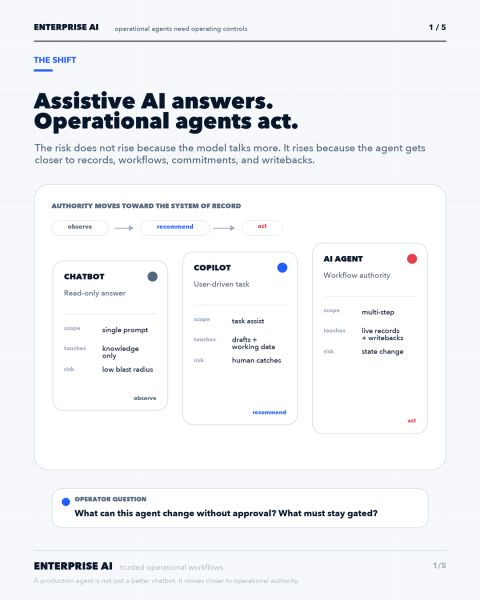
AI agents are moving enterprise AI from assistive software to operational infrastructure.
Chatbots can answer questions, and copilots can help users complete tasks, but operational agents can interact with live systems, trigger workflows, update records, and influence decisions. That shift creates enormous value, but it creates a risk profile that enterprise controls were not designed to handle.
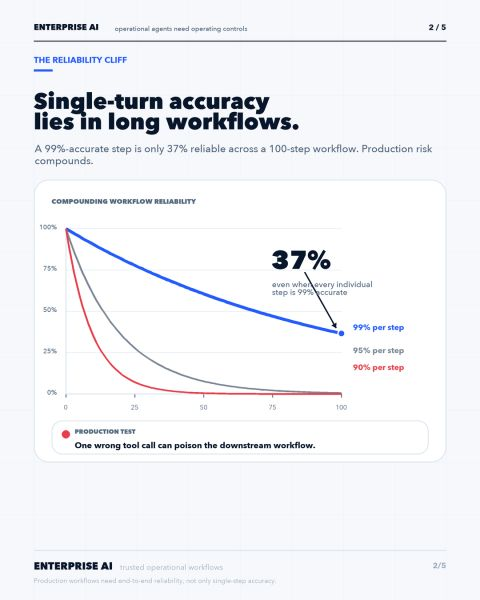
The issue is not whether a model is accurate in a single step. The issue is whether the workflow remains reliable after dozens or hundreds of reasoning steps, tool calls, approvals, and writebacks. A small error can compound when an agent is connected to systems of record.
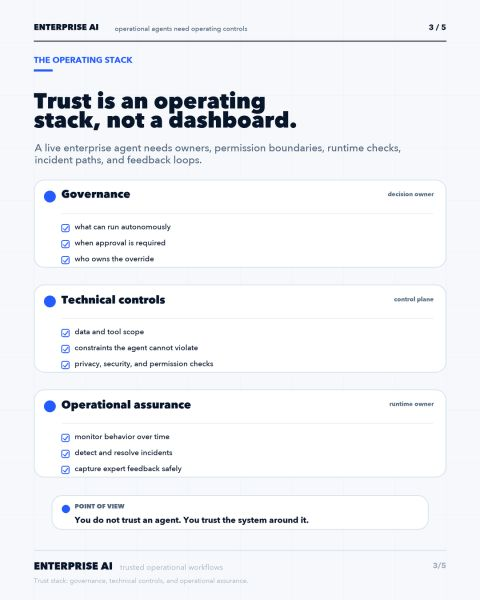
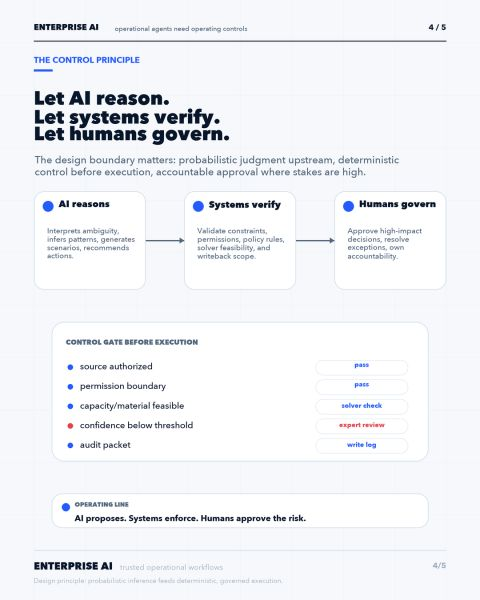
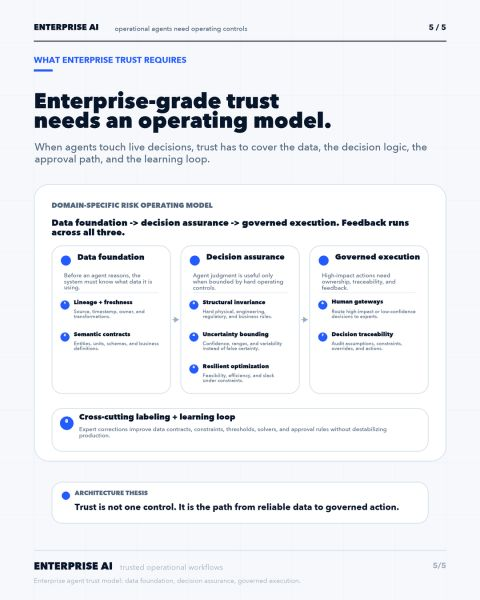
This is why enterprise trust needs to be an operating model, not a dashboard or an after-the-fact audit. AI should reason through ambiguity, generate options, and recommend actions. Systems should verify permissions, constraints, feasibility, and policy rules before execution. Humans should govern exceptions, high-impact decisions, and accountability.
This is especially important in industrial planning and operational workflows, where agents touch BOMs, demand signals, constraints, supply risk, and production decisions. Enterprise AI will scale when organizations can define what agents may change, what must stay gated, and how every decision can be traced.