- Semiconductors
- Enterprise decisions
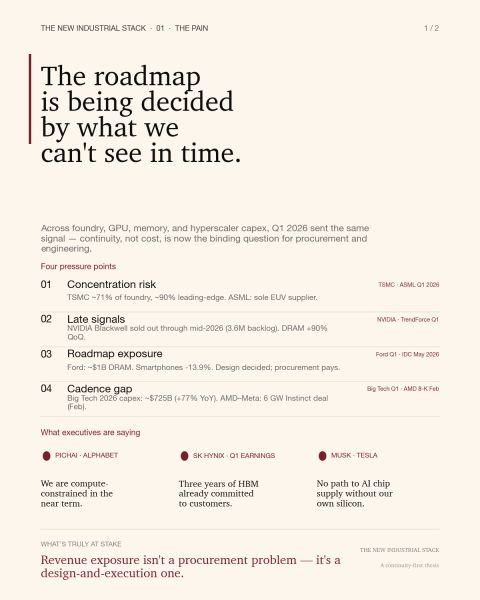
Four months into 2026 and procurement is already making roadmap decisions it doesn't have the authority to make, on a cadence the function was never designed for.
TSMC at ~71% of foundry. ASML the only EUV game in town. NVIDIA Blackwell sold out through mid-2026. DRAM up 90% QoQ. Ford eating a ~$1B DRAM hit. Big Tech capex at ~$725B, up 77% YoY.
If you run sourcing, category, or supply for anything that touches silicon, you already know what this feels like. The commits you signed last year are the constraint everyone is living inside this year. Allocation conversations that used to happen quarterly are happening weekly. And the savings number you're measured on has quietly become the least important thing on your desk.
The real question is whether the parts land at all, and whether you can defend the trade-off you made when finance asks.
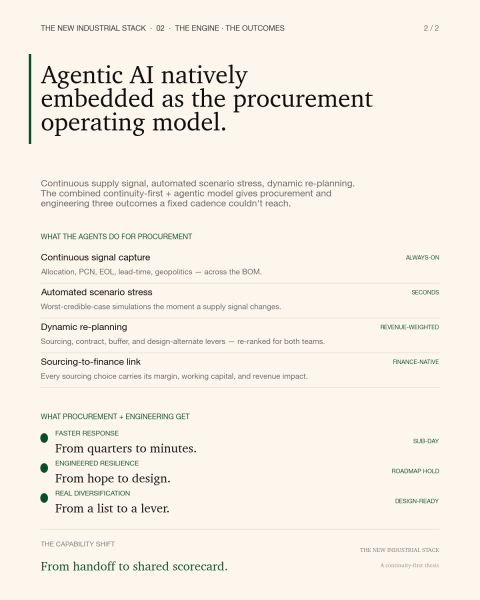
That's the shift. Cost was the scorecard every CPO was hired against. Continuity is the scorecard now, and the operating model hasn't caught up.