- Enterprise decisions
- Enterprise AI
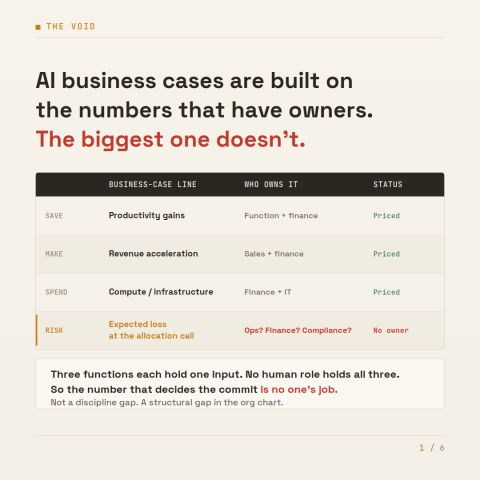
In AI business cases, we typically focus on three key areas: operating costs saved, revenue gained, and technology spend. Each of these has a clear owner who signs off on the numbers and is consistently presented in every deck. However, there is a fourth line item that often goes unnoticed: the expected loss incurred when resources become constrained, forcing difficult decisions about allocation.
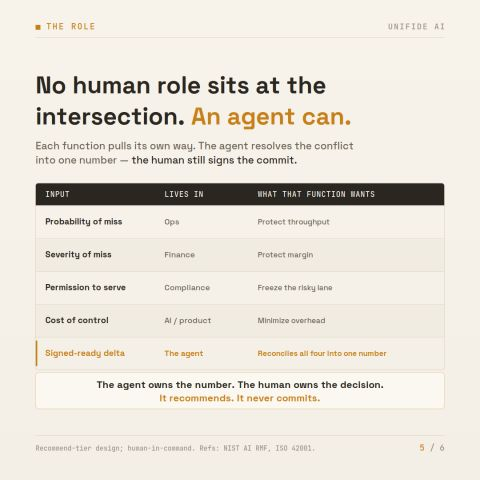
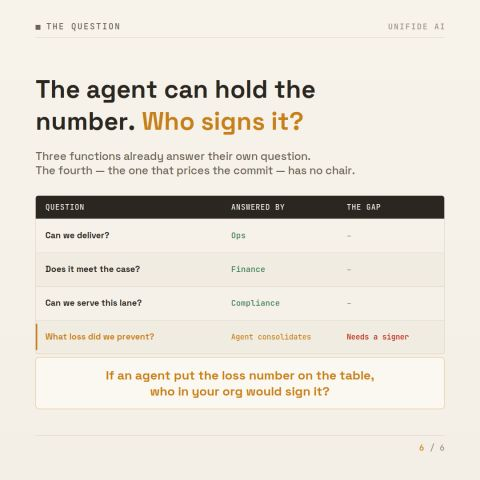
In a high-mix, supply-constrained business, this expected loss can be the most significant of the four, yet it lacks a designated owner. This isn't due to oversight; rather, it's a structural issue. Accurately pricing this loss requires input from operations to define the probability of a miss, finance to assess the severity, and compliance to determine the permissions for service. This involves three distinct functions, leading to multiple meetings, and no single role is positioned where these inputs converge. Consequently, the critical number that influences decision-making remains unaddressed.
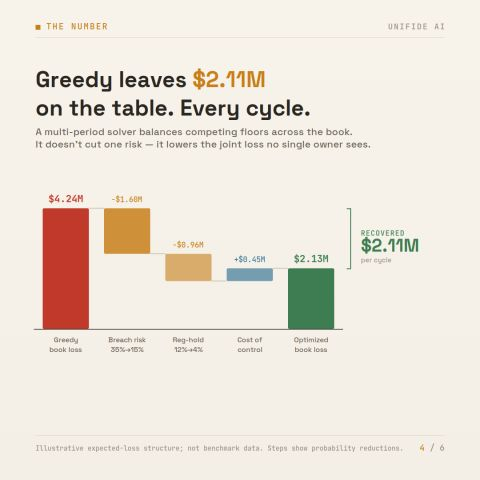
The complexity increases at the book level, where we aren't just allocating a single order but rather managing a portfolio of commitments that compete for limited supply, each with correlated risks and shared capacity. A greedy approach to solving individual orders can inadvertently harm others. The potential recovery from optimizing at the book level under uncertainity represents real financial gains every cycle, yet this crucial figure often slips through the cracks between owners.
So, the pressing question is: who in your organization would be willing to sign off on that loss number if it were presented tomorrow?